
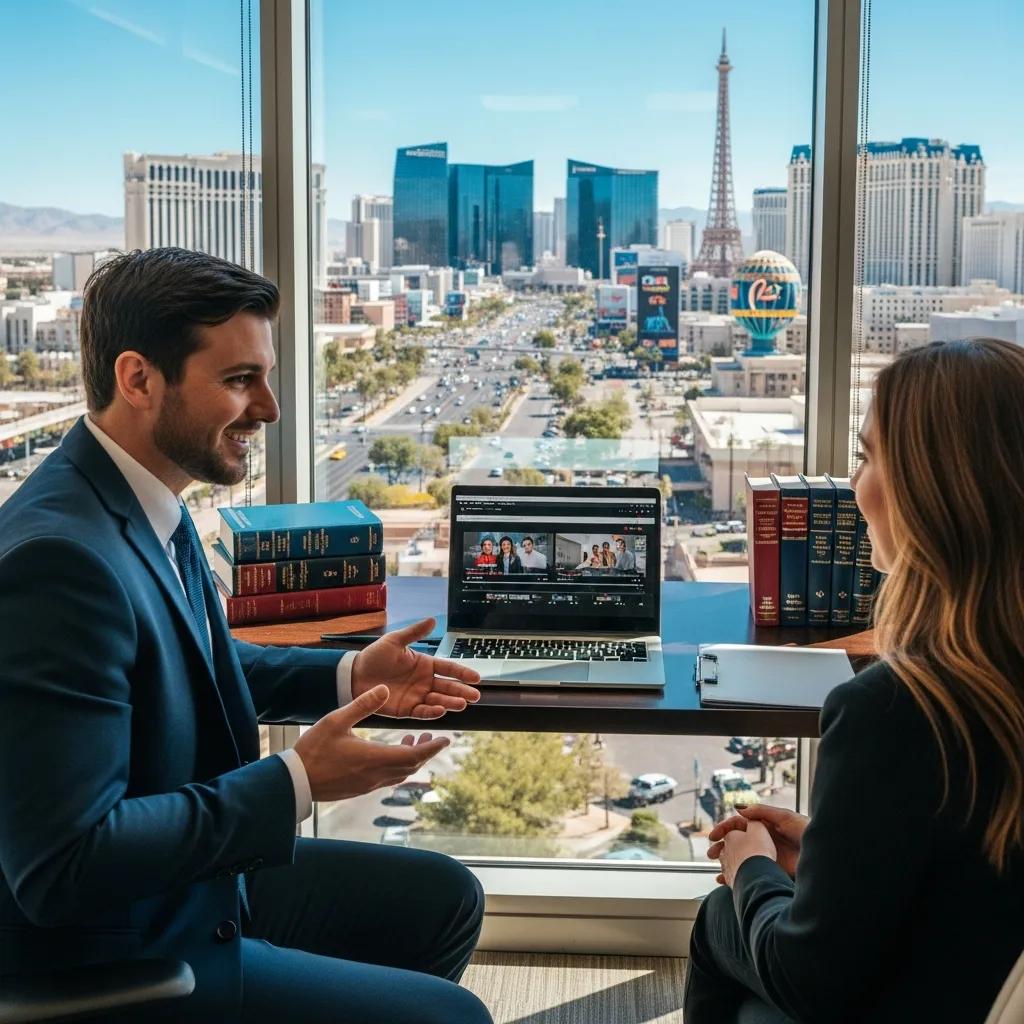
A potential client visits your site after a crash. They need clear answers, but your page offers only dense text and a weak form. That gap can cost you a qualified case. Personal injury attorney marketing works best when video, SEO, paid ads, social media, and landing pages support one clear goal: more qualified clients.
This guide explains how to build that system for a Las Vegas personal injury firm. You will learn which video formats support each stage of the client journey. You will also learn how video can support local SEO, Google Business Profile activity, and lead tracking. The guide covers AI, compliance, repurposing, key performance indicators, return on investment, and a practical launch plan.
What Holistic Personal Injury Attorney Marketing Looks Like
Holistic marketing aligns your message, content, and channels. Each part supports the same business goal. For a personal injury firm, video can build trust, answer common questions, and guide people toward a consultation.
One video can serve several roles. You can place it on a service page, share it on social media, add it to a paid campaign, and publish it on YouTube. Captions and transcripts can also make the content easier to use and find. This approach reduces repeated work and creates a consistent client experience.
How Video Connects with SEO, PPC, and Site Optimization
Start with the client problem and the search intent behind it. A discovery session can shape both the video script and the landing page copy. This keeps the message clear from the first search to the consultation form.
Prepare each finished video with captions, a transcript, and VideoObject schema when appropriate. Add the video to a relevant landing page. Use shorter versions in paid ads and social posts. Then connect analytics and attribution tools to the final conversion. This process helps the team move budget toward channels that produce better results.
Key Benefits for Personal Injury Firms
A holistic program can improve trust, lead quality, and team efficiency. Testimonials show how the firm communicates with clients. Explainers make the next step easier to understand. Aligned ads and landing pages give visitors a consistent message.
One well-produced video can create several assets. It can support a Google Business Profile post, a YouTube upload, a short social clip, and a service page. That reuse can reduce production waste. It also gives the team more ways to test the message and improve performance.
Which Video Types Work Best for Personal Injury Lawyer Advertising?
Each video format has a different job. Testimonial and attorney bio videos often support consideration and conversion. Explainers answer questions about the process, fees, and next steps. Short social clips and commercial spots help build awareness.
Your mix should match your goal. You may want more leads, better leads, or stronger local visibility. A smart production plan also considers reuse. One shoot should create several useful versions.
Common video types and where they fit:
Testimonial Videos: Convert prospects by showing real outcomes and building social proof.
Explainer Videos: Reduce friction by clarifying process, timelines, and fees for claimants.
Attorney Bio Videos: Humanize counsel, showcasing experience and communication style to increase form submissions.
Firm Intro / Commercial Spots: Drive local awareness and lift ad recall for top-of-funnel campaigns.
Short-Form Social Clips: Boost engagement and grow retargeting pools for mid-funnel work.
The table below compares these formats by goal and measurable use case.
Video Type | Primary Goal | Example KPI / Use Case |
|---|---|---|
Testimonial Videos | Build trust & drive conversions | Lift conversion rate on consultation landing pages via social proof |
Explainer Videos | Educate & reduce friction | Lower bounce rate and increase form completions on service pages |
Attorney Bio Videos | Humanize counsel & qualify leads | Improve lead quality (higher consult-to-case conversion) |
Firm Intro / Commercial Spots | Awareness & brand recall | Increase ad recall and branded search volume |
Short-Form Social Clips | Engagement & retargeting | Grow retargeting audience and improve social CTR |
Use this comparison to choose the first assets for your shoot. Next, connect those assets to local search and client acquisition.
How Testimonial Videos Build Trust and Lower Perceived Risk
Testimonials give prospects a view of the client experience. Past clients can describe the firm’s communication, process, and support. That detail may reduce uncertainty for someone who has just been injured.
Keep the delivery natural. Focus on empathy, communication, and useful process details. Add captions and an on-page transcript for access and search value. Secure signed consent before publishing. Limit case details to information that is not privileged.
Publish approved testimonials on service pages, YouTube, and Google Business Profile. Short clips from different client types can also help the firm speak to a wider audience.
Why Explainer and Attorney Bio Videos Matter
Explainers can simplify timelines, contingency fees, and evidence gathering. They help prospects understand what happens next. Attorney bios show experience, courtroom manner, and communication style. These details can affect a hiring decision.
Keep bios concise, from 60 to 90 seconds. Make explainers long enough to answer the main question, often 90 to 180 seconds. Use clear titles, useful descriptions, captions, and links to related pages. These steps connect search intent with trust-building content.
How Video Production Improves Local SEO and Client Acquisition for Las Vegas Firms
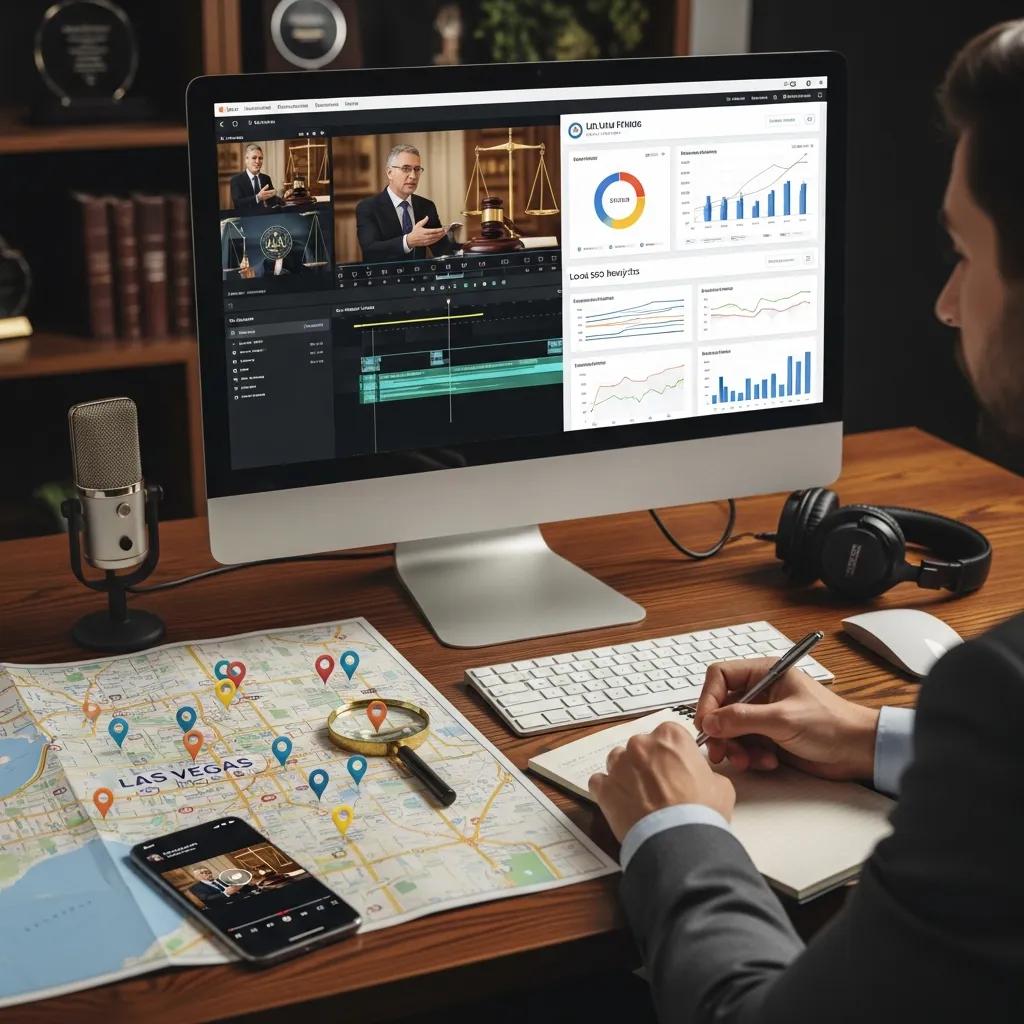
Video can support local SEO in several ways. It can increase time on a page and provide a transcript that search engines can read. It can also give your Google Business Profile and local landing pages useful media.
Use local details with care. Las Vegas neighborhoods, landmarks, and jurisdiction terms can make a video more relevant to local viewers. Short videos on Google Business Profile may also increase listing engagement and clicks. Pair video with local links and consistent business citations.
Google explains how businesses can manage their profiles in its official Google Business Profile guidance. Use that guidance when you publish and update local content.
Below is a practical map of local placements, use cases, and SEO benefits to track.
Local Placement | Video Use Case | SEO Benefit / Example |
|---|---|---|
Google Business Profile | Short firm intro or client testimonial | More GBP views and higher CTRs to call or website |
Local Landing Pages | Explainers targeted to city or neighborhood | Better rankings for geo-modified queries and lower bounce rates |
YouTube (Local Tags) | Longer case study or attorney Q&A | Greater discovery and branded search traffic back to site |
Social Profiles | Short-form clips for engagement | Builds retargeting audiences that yield higher-quality paid conversions |
Map each asset to a clear placement. This shows where production time may deliver the most value. Next, apply the plan to Google Business Profile.
How Video Improves Google Business Profile and Local Search Performance
Videos on Google Business Profile can shape how people use a listing. Use concise titles, useful descriptions, clean thumbnails, and captions. Choose mobile-friendly formats. Make sure the visuals still work when viewers have the sound off.
Add short videos on a regular schedule when you have useful content to share. Track calls, website visits, and direction requests from the profile. Add VideoObject schema to linked pages when it fits the content. Review profile data with landing page results to connect local views with leads.
How Social Video Content Drives Engagement and Builds Retargeting Audiences
Social platforms can expand reach and build retargeting audiences. Turn longer videos into short, platform-specific clips. YouTube often suits longer educational content. TikTok and Reels often suit short stories with one clear point.
For example, a three- to four-minute explainer can become several 15- to 30-second clips. Each clip can cover one process step, client outcome, or attorney insight. Use the clips to build audiences for paid retargeting.
A weekly plan could include two educational posts, one testimonial, and one call-to-action clip. Adjust the schedule to your team and audience.
Legal Marketing Trends That Change Video Strategy
AI tools, mobile viewing, privacy rules, and ad policies continue to shape legal video work. AI can speed up scripts, edits, and creative versions. Mobile viewing makes vertical video and subtitles more important.
Compliance remains central. Firms must review claims, consent, testimonials, and platform rules before launch. Teams that combine efficient production with careful review can move faster without losing trust.
How AI Is Changing Video Workflows for Personal Injury Marketing
AI can help draft scripts, create rough edits, and produce versions for different audiences. This makes it easier to test small message changes and calls to action. It can also support local text overlays or different content orders based on traffic source.
Human review is still essential. A reviewer should confirm legal accuracy and remove claims that could mislead viewers. Every AI-assisted asset should pass a compliance check before publication.
Ethical and Regulatory Rules to Follow in Legal Video Advertising
Personal injury ads must avoid promises about results. They must also use proper testimonial consent and jurisdictional disclaimers when required. Create a checklist for each asset.
- Confirm every factual claim.
- Collect and store signed consent.
- Record approval dates and usage limits.
- Support any statistics or averages with evidence.
- Review platform rules for legal and health-related claims.
Keep consent records current. That makes it easier to respond to takedown requests. These safeguards protect the firm while supporting responsible growth.
Measuring ROI for a Holistic Video Program
Good measurement starts with clear goals. Link video activity to website actions, leads, and case outcomes. This helps the firm estimate value per lead instead of counting views alone.
Useful metrics include views, watch time, click-through rate, engagement rate, landing page conversion rate, cost per lead, and lifetime value. Multi-touch attribution can show how video supports the full journey. It can prevent the last click from receiving all the credit.
Bring platform data, site analytics, and CRM intake data into one report. This view shows both lead volume and lead quality. The table below lists core metrics and simple ways to track them.
Metric / KPI | What It Measures | How to Track / Benchmark |
|---|---|---|
Views | Reach and initial exposure | Platform analytics; compare impressions-to-view ratios |
Watch Time / Average View Duration | Engagement and content relevance | Prioritize creative updates based on watch time patterns |
Click-Through Rate (CTR) | How well creative drives site traffic | Ad manager and YouTube analytics |
Conversion Rate (on landing page) | Effectiveness of page plus video at generating leads | Track with GA4 events and form submission goals |
Cost Per Lead (CPL) | Paid media efficiency | Ad spend divided by number of attributed leads |
Lead-to-Client Conversion | Lead quality and downstream value | CRM tracking from intake through retained client |
Standardize these KPIs and connect them to CRM outcomes. That creates a stronger ROI model for future video work.
Which KPIs Matter Most for Legal Video Campaigns?
Choose KPIs based on the campaign goal. For awareness, track views and average view duration. For conversion, track click-through rate, landing page conversion rate, cost per lead, and lead-to-client conversion.
Watch time can show whether the story holds attention. High views with low watch time may point to a creative or targeting problem. Review cost per lead with lead quality. A cheap lead is not useful if it rarely becomes a consultation or case.
Combine platform analytics, GA4 events, and CRM outcomes in one dashboard. This gives the firm a clearer view of retained client value.
How Case Studies Show the Impact of Holistic Video Marketing
A useful case study explains the starting point, the work completed, and the outcome. Include baseline metrics when available. Describe the video, SEO, landing page, and channel changes. Then show intermediate measures such as engagement and click-through rate.
Use multi-touch attribution when possible. This helps distribute credit across the client journey. Clear timelines, budgets, and lessons make the results easier to assess.
Getting Started: A Roadmap for Las Vegas Personal Injury Firms
A simple roadmap can move a firm from review to pilot to scale. Begin with a short audit. Review key landing pages, Google Business Profile activity, and paid media results. Use those findings to choose video topics that address the largest gaps.
Then run a pilot with one testimonial, one explainer, and one attorney bio. Optimize each asset for search, Google Business Profile, and social reuse. Track cost per lead, engagement, and lead quality. After the pilot, update scripts and thumbnails based on watch time and click-through rate.
Document consent and compliance steps before scaling. AI-assisted editing can help create variants, but every final asset still needs human review.
Simple first steps:
- Audit: Review your site, Google Business Profile, and paid performance. Identify priority pages and audiences.
- Pilot Production: Shoot a compact set of videos for Google Business Profile, YouTube, and paid social.
- Measurement Plan: Define KPIs, set up GA4 events and CRM tracking, and choose a reporting schedule.
These steps create a repeatable system. They also give you a clear way to compare potential partners and plan the next production cycle.
What to Expect from a Free Strategy Meeting with Whisenhunt Media
A free strategy session with Whisenhunt Media starts with discovery. The team can review your current assets, relevant portfolio examples, and Las Vegas search goals. The discussion can then shape a focused video scope and measurement plan.
After the call, you will receive a proposed shoot list, a distribution plan that includes SEO and PPC, and a starting framework for tracking cost per lead and lead quality.
How Whisenhunt Media’s Local Focus Helps Las Vegas Law Firms
Whisenhunt Media combines local Las Vegas knowledge with legal video marketing experience. Their portfolio includes legal-focused work, such as a case study with Jade Jacobo Personal Injury Law. The company also cites a 232% lead increase for a realtor and an 18% conversion rate for marketing-driven legal traffic.
A local partner can simplify shoot logistics and support local landing page and Google Business Profile work. Local context can also make scripts more useful to Las Vegas audiences. These benefits can make it easier to move from strategy to production.
Local Knowledge: Faster coordination for location shoots and context-aware scripting.
Legal Portfolio: Proven formats that resonate with injury clients in the market.
Consultative Approach: Free strategy meetings that define production and measurement up front.
A local, specialized video provider can make the path from strategy to client acquisition more efficient and predictable.
Conclusion
Holistic personal injury attorney marketing helps Las Vegas firms use video with more purpose. It aligns creative work with SEO, paid media, social distribution, landing pages, and CRM tracking.
Start with an audit and a small pilot. Measure both lead volume and lead quality. Improve the work based on evidence. Then scale the formats and channels that support your goals.
Do not make more content just to fill a calendar. Make each video earn its place in the client journey.
Free tool
See what AI says about your business
Kiki, our AI strategist, reads your real website in a live browser and hands you a personalized growth plan in about a minute. Free, no signup.
Analyze my business →About Bernadette Valer
Bernadette Valer is part of the production team at Whisenhunt Media, writing from the projects the studio plans, shoots, and ships.