
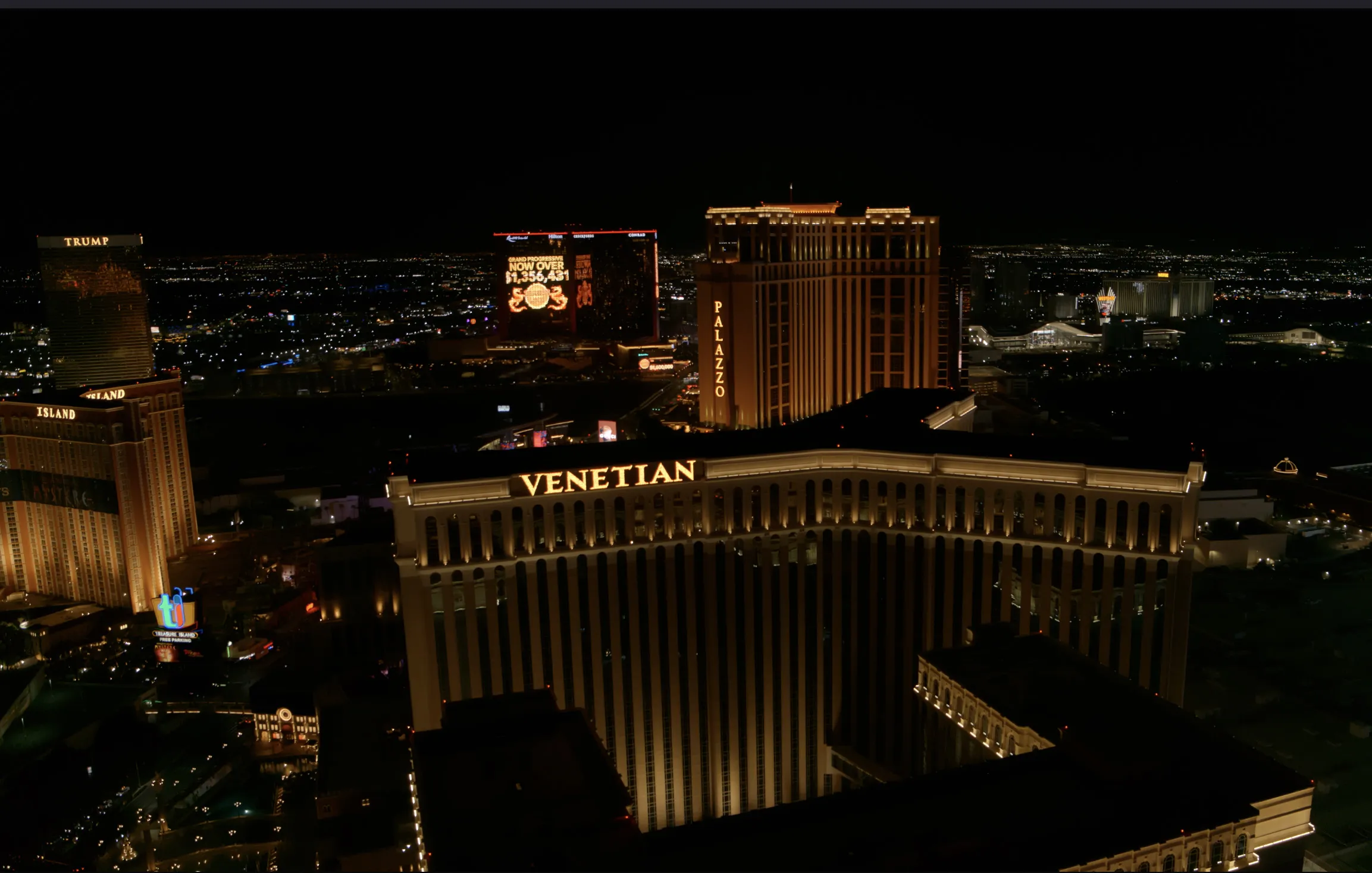
A project can look flat when every shot stays at ground level. Professional aerial videography adds scale, context, and motion to the story. In Las Vegas, one flight can show a venue, its surroundings, and the energy of an event in a single view.
Las Vegas offers a strong setting for aerial video. The city has bold architecture, open desert views, and a busy event scene. Professional aerial videography helps brands show these spaces with clear purpose. This guide explains the main benefits, common uses, safety rules, equipment, and hiring tips. It also covers costs so you can plan a project with fewer surprises.
"In today's visually-driven world, compelling video content is not just an advantage, it's a necessity for capturing attention and conveying complex messages with clarity and impact."
- Visual Content Strategy Review
Why Professional Aerial Videography Matters in Las Vegas
Professional aerial videography services give viewers a clear sense of place. A drone can reveal the size of a facility, the layout of an event, or the reach of a landscape. Ground cameras cannot always provide that context. Aerial shots also add movement and visual variety. Used with a clear plan, they can hold attention and support a stronger story.
Strategic Benefits for Commercial and Event Coverage
Aerial video works well for commercial and event coverage because it shows more in less time. A drone can move above a festival, sports event, or corporate gathering and show the full scene. This view helps audiences understand the scale and setting. It can also give a campaign more memorable footage. The strongest results come when aerial shots support the main message rather than act as decoration.
Key Industries Using Las Vegas Drone Videography
Many Las Vegas industries use drone video for marketing, planning, and project records. Events use it to show crowd size and venue energy. Construction teams use it to track site progress. Tourism brands use it to present views that visitors cannot get from the ground. Law firms and dental practices can also use polished footage to support a modern visual presence.
"For professional services like law firms and dental practices, a strong visual presence and modern marketing techniques are crucial for building trust and attracting new clients in a competitive market."
- Professional Services Marketing Journal
Uses for Events and Construction Monitoring
Drone footage can show the true size and mood of a live event. It can also create useful promotional and archive content. On a construction site, crews may use flights to review progress, map the site, measure materials, and inspect safety conditions. This record can make updates easier to share with owners and other stakeholders. It can also help teams spot issues before they grow.
Safety and Compliance for Las Vegas Aerial Work
Safety must guide every professional aerial videography project. Commercial drone pilots in the United States must follow the rules that apply to their operation. FAA Part 107 guidance explains key requirements for remote pilots and small unmanned aircraft. Certified pilots plan the flight, review the site, and follow the limits that apply to the job.
What FAA Part 107 Certification Covers
FAA Part 107 is the main federal framework for commercial drone operations in the United States. Pilots must pass a knowledge test before they can operate under the rule. The test covers airspace, weather, aircraft limits, and emergency procedures. This training helps pilots make safer choices before and during a flight. It also gives clients a clear starting point when they review a production company.
Las Vegas Rules and Controlled Airspace
Las Vegas flights may involve controlled airspace and local limits. Pilots must review the location before takeoff. They may need authorization near Harry Reid International Airport and other controlled areas. They must also keep the drone within visual line of sight and follow altitude limits. A careful review reduces the risk of delays, penalties, and unsafe flights. Professional aerial videography depends on planning as much as it does on camera skill.
Equipment and Technology in Professional Aerial Video Production
Good aerial video starts with the right aircraft and camera. Professional crews use drones with high-resolution cameras, stable mounts, and sensors that support safe flight. The best setup depends on the location, weather, subject, and final use of the footage. Professional aerial videography is not defined by one drone model. It depends on matching the equipment to the shot.

High-resolution cameras and stable flight systems help crews capture clean aerial footage.
Different drones suit different jobs. A multirotor can hover and move through tight spaces. A fixed-wing aircraft can cover more ground. Payloads may include cameras or other sensors. The choice should follow the project goal, not a preset equipment list.
Drone Technology: Types, Payloads, and Applications "The different types of drones can be differentiated in terms of the type (fixed-wing, multirotor, etc.), the degree of autonomy, the size and weight, and the power source. These specifications are important, for example for the drone’s cruising range, the maximum flight duration, and the loading capacity. Aside from the drone itself (i.e., the ‘platform’) various types of payloads can be distinguished, including freight (e.g., mail parcels, medicines, fire extinguishing material, flyers, etc.) and different types of sensors (e.g., cameras, sniffers, meteorological sensors, etc.)."
- B Custers, "Drone technology: Types, payloads, applications, frequency spectrum issues and future developments," 2016
4K and 6K Cameras for Cinematic Results
Professional drones with 4K or 6K cameras can capture sharp detail and rich color. Models such as the DJI Inspire 3 or the Mavic 3 Cine use large sensors and high dynamic range. These features help when footage must support a polished commercial or film. A three-axis gimbal keeps the image smooth during turns and changing flight conditions. The final result depends on both the gear and the person framing the shot.
Tools That Improve Production Efficiency
Modern drones can reduce time in the air through planned flight paths and GPS positioning. Obstacle avoidance can add another layer of support for the pilot. These tools let the crew focus on composition while still managing the flight. They do not replace human judgment. The pilot must still review the site, watch conditions, and respond to changes.
How to Choose a Las Vegas Drone Company
The right drone company affects the quality, safety, and usefulness of your footage. Look beyond a single impressive clip. Review the company’s experience, portfolio, communication, and insurance. Ask how the team handles permits, weather changes, and delivery. A professional aerial videography partner should make the process clear before the shoot begins.
What to Review Before Hiring a Service
Use these checks when comparing professional drone videography services:
Experience and Specialization: Look for work in your industry or with similar project needs. Ask how long the company has operated and how many projects it has completed.
Comprehensive Portfolio: Review past work for image quality, stable movement, useful framing, and a consistent style.
Client Testimonials and References: Read reviews on more than one platform. For larger projects, ask for direct references.
FAA Part 107 Certification and Insurance: Confirm that pilots hold the needed certification and that the company carries liability insurance.
Equipment and Technology: Ask whether the team has the cameras, drones, and stabilizers your project requires.
Communication and Project Management: Review how the team handles planning, updates, approvals, and final delivery.
Why Portfolios and Testimonials Matter
A portfolio shows how a company solves different visual problems. Look for work that matches your location, pace, and intended audience. Testimonials can show whether the team communicates well and meets expectations. Together, these sources give a better view of service quality than a sales promise alone. They can also help you find a company that fits the demands of your project.
Costs and Packages for Aerial Video Production in Las Vegas
Project cost depends on the work involved. Scope, flight time, locations, equipment, permits, and editing all affect the final price. A clear brief helps a production company build a useful estimate. Professional aerial videography may use a simple package for one location or a custom plan for a larger production.
How Scope and Equipment Affect Pricing
A short flight over one facility may need less planning and editing than a large event. Multiple locations can add travel and setup time. Specialized tools, such as thermal cameras or LiDAR, may also change the equipment needs. Post-production, data processing, licensing, permits, and rush delivery can affect the total. Ask for these items in the estimate so the final cost is easier to understand.
Strong aerial work does more than rise above the scene. It gives the story a reason to take flight.
Free tool
See what AI says about your business
Kiki, our AI strategist, reads your real website in a live browser and hands you a personalized growth plan in about a minute. Free, no signup.
Analyze my business →About Ben Whisenhunt
Ben Whisenhunt is the Creative Director at Whisenhunt Media, specializing in cinematic video production and brand storytelling. With years of experience in the Las Vegas market, Ben helps businesses elevate their brand through compelling visual content.