

Customer journey mapping is an essential tool that provides businesses with deep insights into their customers’ experiences throughout the purchasing process. This process involves visualizing the steps a potential buyer takes, from initial awareness to post-purchase loyalty and advocacy. By understanding customer behaviors, preferences, and pain points, marketers can tailor their strategies to enhance engagement, improve conversions, and foster lasting relationships. In this comprehensive article, we will explore the different stages of customer journey mapping, how to create a customer journey map step-by-step, the importance of customer journey map templates, detailed insights on customer touchpoints analysis, and how customer experience mapping perfectly aligns customer emotions with business processes. We’ll also highlight the critical role of marketing funnel optimization and buyer persona development in maximizing customer journey effectiveness. Alongside, we incorporate actionable tactics, industry statistics, and case studies to empower you with practical knowledge to revolutionize your marketing strategy.
What Is Customer Journey Mapping and Why Does It Matter for Marketing?
Customer journey mapping refers to the strategic process of creating a visual representation of the customer’s interactions and experiences with a brand from the first touch through post-purchase engagement. It allows marketers and business leaders to see the journey from the customer’s perspective, identifying critical decision points and emotional highs and lows. Mapping this journey enhances understanding of consumer behavior, enabling tailored marketing approaches that resonate on a personal level.
Effective customer journey maps improve brand engagement, customer satisfaction, and loyalty, leading to increased retention and higher lifetime value. According to a recent study, companies that use customer journey mapping experience a 54% improvement in customer retention rates and a 49% increase in cross-sell revenue, highlighting its ROI potential.
How to Create a Customer Journey Map: Step-by-Step Guide
Knowing how to create a customer journey map is fundamental for businesses aiming to optimize their marketing, sales, and customer service efforts. Follow these detailed steps to build an actionable map:
1. Define Clear Objectives and Scope
Start by establishing what you want your customer journey map to achieve. Are you focusing on a specific product, service, or overall brand interaction? Defining the scope guides data collection and stakeholder involvement.
2. Gather Comprehensive Customer Data
Data collection involves tapping into qualitative and quantitative sources such as customer interviews, surveys, website analytics, CRM data, social media insights, and direct feedback. This will give you a 360-degree view of customer behaviors, motivations, and pain points.
3. Identify Customer Personas and Segments
Segment your audience into buyer personas representing distinct demographics, psychographics, and behaviors. These personas ensure the journey map reflects different experiences and expectations of various customer groups.
4. Map Out Customer Touchpoints and User Flows
Document every interaction customers have with your brand—both digital and physical—across channels. Map user flows illustrating how prospects move through awareness, consideration, decision, retention, and advocacy stages. This visual flow highlights where customers engage, drop off, or require additional support.
5. Align Cross-Functional Stakeholders
Involve marketing, sales, customer service, product development, and other relevant teams to ensure the journey map reflects diverse perspectives, creating unified goals and strategies tailored to customer needs.
6. Identify Pain Points and Opportunities
Analyze the map for friction points causing customer dissatisfaction or loss. Highlight areas ripe for improvement or innovation to enhance the overall customer experience.
7. Create the Visual Map Using Tools and Templates
Leverage digital platforms or customer journey map templates (explained further below) to design clear, interactive maps. Visual clarity aids alignment and facilitates iterative updates.
8. Share Findings and Implement Actions
Distribute the journey map insights organization-wide. Develop targeted strategies informed by the map, including content creation, messaging, channel selection, and customer service enhancements.
Regularly update your customer journey maps based on ongoing feedback and data to keep pace with evolving customer expectations.
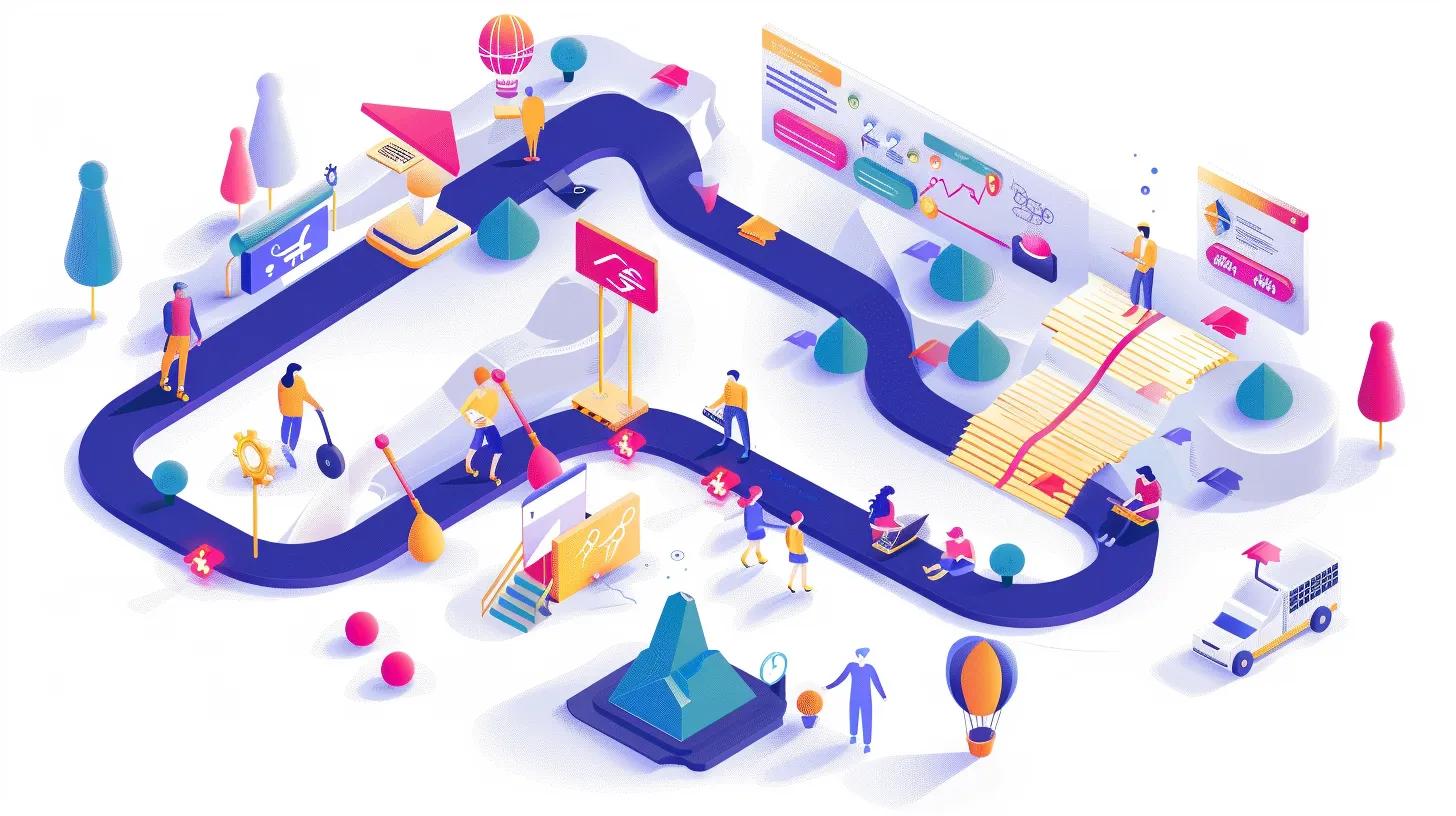
Understanding Customer Journey Map Templates: Choosing the Right Format
Customer journey map templates are frameworks that help structure how you visualize your customers’ experiences. Selecting appropriate templates increases clarity and effectiveness.
Types of Customer Journey Map Templates
- Current State Maps: Illustrate your customers' existing experience with your brand, focusing on actual behaviors and feelings. Useful for identifying pain points and opportunities.
- Future State Maps: Depict an idealized or improved customer experience based on strategic goals or innovations. Helps in planning customer experience improvements.
- Day-in-the-Life Maps: Focus on a typical customer’s daily interactions with your product or service, highlighting moments that affect their satisfaction.
- Service Blueprints: Extend journey maps to include behind-the-scenes business processes supporting customer touchpoints, aligning operations with customer experience.
How to Choose the Right Template
Select a template based on your objectives:
- For diagnosis and immediate improvements, use current state maps.
- Planning transformative changes or new initiatives? Future state maps are appropriate.
- If customer insights depend on daily habits, use day-in-the-life templates.
- For operational alignment, service blueprints best bridge customer actions and internal workflows.
Many tools and platforms offer customizable customer journey map templates—from simple spreadsheets to advanced visualization software—enabling teams to find formats that fit their process and audience.
Exploring Customer Journey Stages: From Awareness to Advocacy
Understanding detailed customer journey stages allows organizations to deliver targeted marketing strategies that meet customer expectations at every phase. Commonly, these stages include:
1. Awareness Stage
Customers recognize a need or problem. Marketing tactics include:
- Content marketing—blogs, infographics, and videos addressing pain points.
- SEO and paid advertisements to increase visibility.
- Social media campaigns to build initial brand awareness.
2. Consideration Stage
Potential customers research and evaluate options. Tactics involve:
- Detailed product comparisons and feature sheets.
- Webinars, demos, and case studies to educate prospects.
- Retargeting ads to keep your brand top of mind.
3. Decision Stage
Buyers make purchase choices. Strategies here include:
- Personalized discounts and special offers.
- Customer testimonials and social proof.
- Clear, compelling calls to action and simplified checkout processes.
4. Retention Stage
Post-purchase focus is on satisfaction and repeat business. Marketers use:
- Follow-up emails and loyalty programs.
- Customer support and seamless service experiences.
- Engaging content on usage tips and product updates.
5. Advocacy Stage
Customers become brand promoters. This stage employs:
- Referral incentives and ambassador programs.
- Encouraging reviews and user-generated content.
- Community building events and social engagement.
Research shows that post-purchase engagement can increase customer lifetime value up to 30%, emphasizing the significance of retention and advocacy phases.
Customer Touchpoints Analysis: Identifying and Optimizing Every Interaction
Customer touchpoints analysis involves identifying, evaluating, and enhancing every interaction a customer has with your brand across all channels, both online and offline.
Steps to Conduct Effective Customer Touchpoints Analysis
- List All Customer Interaction Points: Include your website, mobile apps, social media, email, customer service calls, in-store visits, packaging, and post-purchase follow-ups.
- Gather Customer Feedback and Behavior Data: Analyze customer surveys, reviews, support tickets, analytics, and social listening tools to assess experiences at each touchpoint.
- Evaluate Each Touchpoint’s Effectiveness: Determine how well each interaction meets customer needs, supports brand messaging, and leads to conversions or retention.
- Identify Friction Points: Look for inconsistencies, delays, or negative emotions customers associate with specific touchpoints.
- Prioritize Areas for Improvement: Focus on touchpoints with the highest impact on customer satisfaction and business goals.
- Implement Optimization Strategies: This can include redesigning interfaces, training staff, refining messaging, and integrating technology to streamline experiences.
- Measure Results and Iterate: Use KPIs and customer feedback to assess improvements over time and make further adjustments.
Incorporating cross-channel integrations ensures smooth transitions between touchpoints, reducing customer effort and increasing loyalty.
Customer Experience Mapping: Aligning Emotions, Pain Points, and Business Processes
Customer experience mapping goes beyond journey mapping by including emotional and motivational dimensions, linking them with internal business processes to create seamless customer interactions.
Key Components of Customer Experience Mapping
- Customer Emotions Tracking: Capture feelings customers experience at each stage to understand satisfaction drivers and barriers.
- Pain Points Identification: Highlight areas causing frustration or unmet expectations through direct feedback and behavioral data.
- Expectation Management: Align marketing promises with actual service delivery to prevent disappointment.
- Business Process Alignment: Adjust internal operations, training, and policies to deliver consistently positive experiences.
This holistic approach fosters empathy within organizations, resulting in more customer-centric cultures and better business outcomes. For example, integrating customer emotion analytics can increase positive sentiment by 25% and reduce churn by 15% in competitive sectors.
Enhancing Marketing Funnel Optimization Through Customer Journey Mapping
Optimizing the marketing funnel is closely linked to understanding and refining the customer journey. By defining clear objectives for each funnel stage and applying data-driven approaches, marketers can effectively nurture leads and boost conversion rates.
Utilizing relevant metrics such as:
- Conversion Rate - tracking the percentage of visitors that become customers;
- Bounce Rate - identifying when customers disengage;
- Customer Lifetime Value (CLV) - measuring the long-term revenue generated per customer;
…Marketers can uncover where prospects drop off and what tactics to implement next.
Detailed segmentation strategies, including demographic, behavioral, and geographic segmentation, enable personalized targeting that resonates with each customer group, maximizing funnel efficiency.
Integrating Video Production to Amplify Customer Journey Mapping and Engagement
Video production has become a pivotal element in modern marketing, significantly enhancing customer journey mapping by delivering compelling narratives and capturing attention at multiple touchpoints.
Effective video storytelling supports marketing funnel optimization by:
- Narrative Appeal: Crafting stories that evoke emotions strengthens brand connection.
- Enhanced Engagement: Visual content retains viewer attention longer, boosting interaction rates.
- Educational Value: Explainer and demo videos simplify complex information, aiding decision-making.
Best practices for integrating video in customer touchpoints include using short clips for social media, embedding videos in email marketing campaigns to increase open rates, and placing videos on landing pages to improve conversions.
Mini Case Studies: Real-World Applications and Successes
E-Commerce Brand: Streamlining Customer Journey to Reduce Cart Abandonment
An established e-commerce retailer implemented detailed customer journey mapping using current state templates combined with customer touchpoints analysis. They identified a key friction point during the checkout process caused by ambiguous shipping costs and cumbersome navigation.
As a solution, the company optimized the checkout flow, provided transparent pricing information upfront, and introduced personalized email reminders featuring demo videos highlighting product benefits and checkout assistance.
Outcomes: Cart abandonment dropped by 28%, and conversion rates increased by 22% within three months, demonstrating the power of targeted journey mapping and video integration.
B2B SaaS Company: Enhancing Buyer Persona Accuracy to Boost Lead Quality
A B2B SaaS provider utilized comprehensive customer experience mapping, coupling demographic and psychographic data to refine buyer persona development. By aligning messaging and product offerings with the refined personas, they created tailored content for different funnel stages, including webinars and case studies.
Through customer journey map templates focusing on future state scenarios, they foresaw and addressed post-purchase pain points by improving onboarding support.
Results: Qualified lead generation improved by 35%, and customer retention rates rose by 18%, underscoring the critical role of persona-driven journey mapping.
How Metrics Measure the Impact of Customer Journey Mapping on Business Performance
Tracking specific key performance indicators (KPIs) after implementing customer journey mapping helps quantify its benefits. Important metrics include:
- Engagement Rates: Increased interactions on digital touchpoints signal better alignment with customer expectations.
- Conversion Rates: Higher conversion rates at each funnel stage reflect effective journey optimization.
- Customer Retention and Loyalty: Improvements demonstrate sustained satisfaction and advocacy.
- Customer Lifetime Value (CLV): Growth indicates enhanced revenue streams from repeat business.
Studies show that companies with well-executed customer journey and experience mapping initiatives achieve 10-15% higher profitability than their competitors.
Summary: Leveraging Customer Journey Mapping to Drive Marketing Success
Customer journey mapping is a foundational strategy for understanding and delivering superior customer experiences. Learning how to create a customer journey map, selecting the best customer journey map templates, and thoroughly analyzing customer touchpoints empower marketers to craft highly personalized, data-driven campaigns.
Detailed exploration of the customer journey stages ensures precise targeting, while integrating customer experience mapping aligns internal processes with external expectations. Utilizing video production and buyer persona development further strengthens engagement and conversions.
By embracing these insights and methodologies, businesses can reduce friction, increase loyalty, and substantially boost ROI in today’s competitive marketplace.
Free tool
See what AI says about your business
Kiki, our AI strategist, reads your real website in a live browser and hands you a personalized growth plan in about a minute. Free, no signup.
Analyze my business →About Whisenhunt Media
Written by the Whisenhunt Media production team, from the projects the studio plans, shoots, and ships in Las Vegas and on the road.