
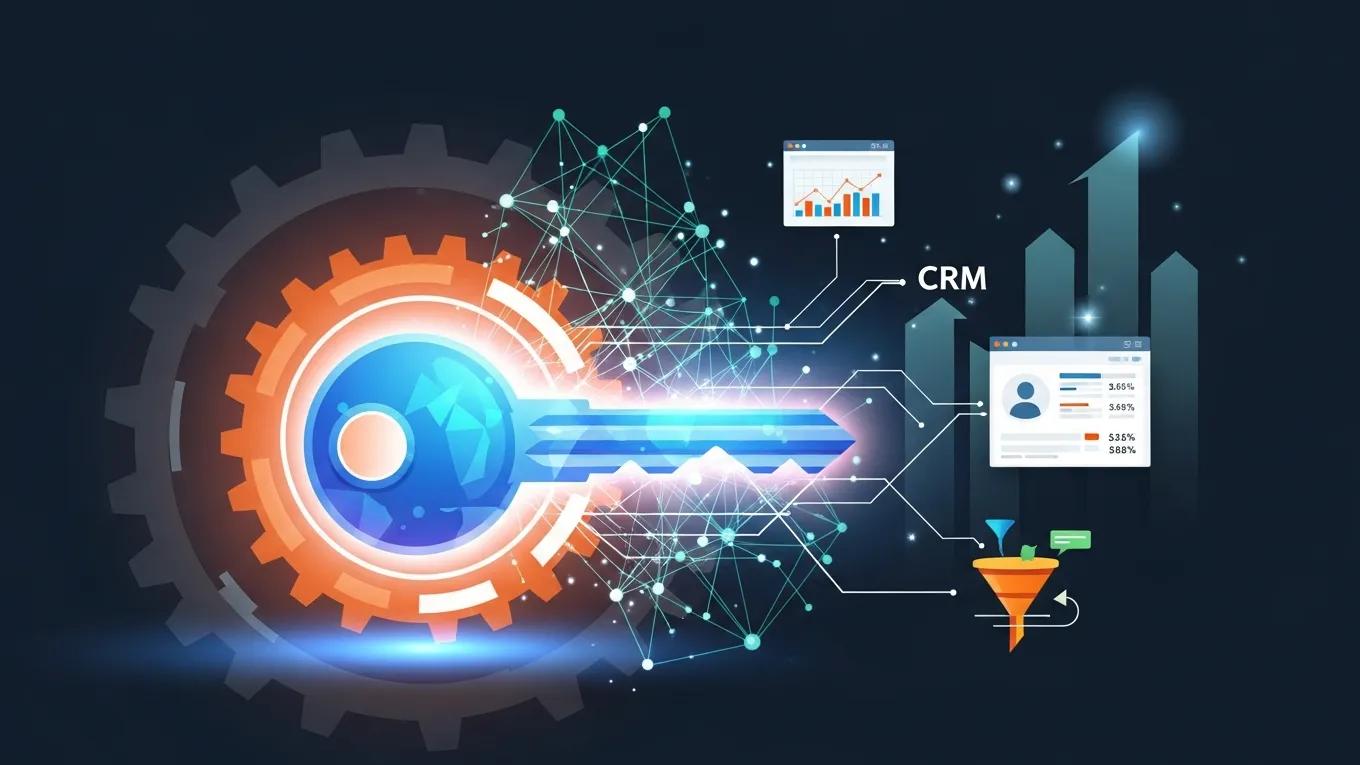
Your team opens the CRM and finds a locked door. The subscription ended. Forms no longer capture leads. The blog cannot publish. Automations sit inside a vendor's system, out of reach.
This failure is easy to miss during setup. A rented platform feels simple at first. Over time, your data, workflows, content, and costs all tie to one vendor. Before you choose HubSpot CRM or another platform, decide what you actually need to own.
What an Agentically Engineered CRM Means

Vibe coding means telling an AI agent what you want and letting it write the code. The agent builds and connects the parts. We use a more precise term: Agentically Engineered.
This approach uses AI agents to design, write, test, and deploy a custom CRM inside your website codebase. It can cover the data model, automation, workflows, dashboards, and reports. The system follows your business rules.
It is not a setup inside someone else's schema. It is not a workaround inside someone else's interface. Your team owns the schema, automation, and code. The system runs on your infrastructure. You can extend it with another agent or developer later.
The intent may start as a conversation with an AI agent. The result is a tested, version-controlled application that works as a full CRM.
The Traditional Monolith Model: Rent the Platform, Rent the Risk
Platforms such as HubSpot CRM and Salesforce built this category. They offer mature ecosystems, large app marketplaces, support teams, and compliance certifications. Those features matter to many enterprises.
A traditional platform can be the right choice in several situations. You might need SOC 2 Type II on day one. A 500-person sales team may need to start work tomorrow. A ready-made AppExchange integration can save months of development.
The trade-off is simple. You rent the system. Stop paying, and the CRM stops working. Your data lives in the vendor's schema. Your workflows run on its engine. Your blog, landing pages, and email templates may live in its CMS.
You can export contacts. You may also export posts as HTML. You cannot export the machinery that moves leads through the funnel. Forms, email automation, and workflows stop functioning the moment you leave.
For a marketing team that wants a turnkey stack, the monolith can be a sensible choice. Even so, any CRM comparison deserves care before you hand one vendor control of your data and publishing system.
Review the NIST Cybersecurity Framework when you assess who will manage security, access, and system risk. Ownership does not remove those duties. It changes who holds them.
The Agentically Engineered Alternative: Own the Infrastructure
When an enterprise website includes a custom CRM, the system lives in the same codebase. It can handle contacts, deals, pipelines, automation, reports, email sequences, forms, and blog publishing.
It is not a plugin. It is not a SaaS tenant. It is your application.
What changes when you own the CRM layer:
No rent, ever. The CRM runs on your infrastructure. You avoid per-seat, per-contact, and per-email charges. You also avoid contract renewal risk.
Your schema, your rules. Custom objects, fields, relationships, and automation live in code. Your team can version, test, and review every change.
Blog continuity by default. The blog is part of the CRM. If you stop paying a monthly service fee, the CMS and CRM stay yours. You keep publishing, capturing leads, and running automations.
Agent-native extensibility. Because the CRM is code, an AI agent or developer can read, change, and extend it. You avoid most vendor limits and permission steps.
No vendor lock-in. You own the repository. You can host it anywhere. You can also hand it to another developer or agent team at any time.
The trade-off: You own maintenance. Your team or partner must handle security patches, dependency updates, scaling, and compliance. There is no free 24/7 vendor help line. For teams without technical capacity, this risk is real.
HubSpot CRM vs Owned CRM: The Blog Continuity Difference
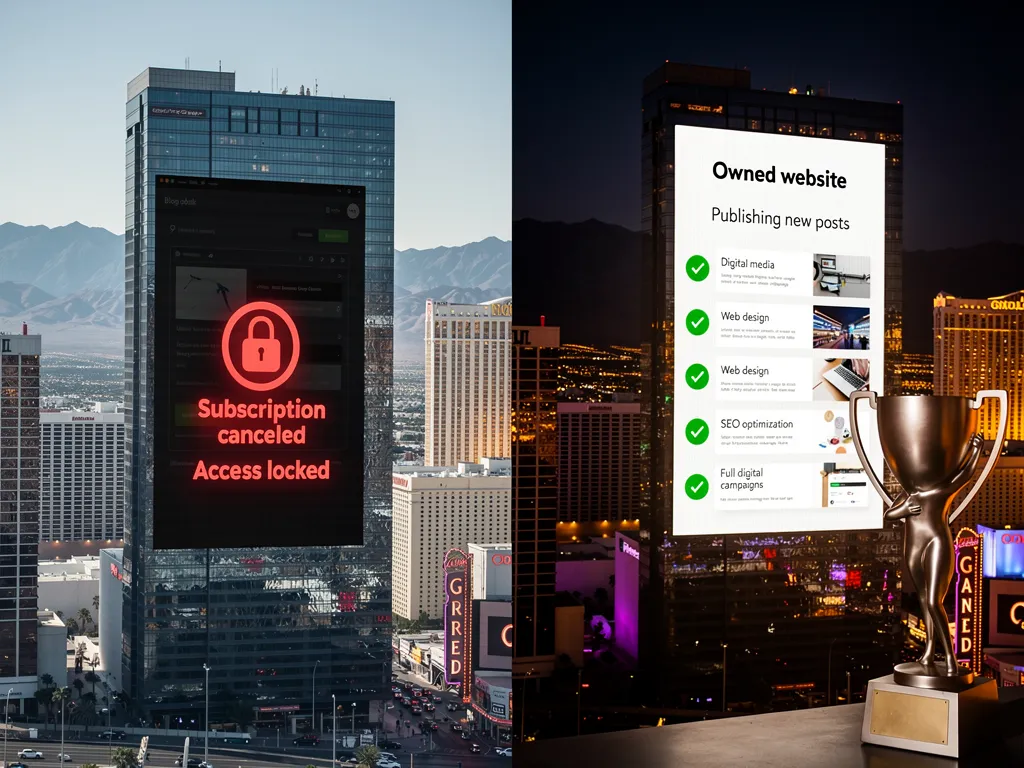
Many businesses see this difference only at renewal time.
HubSpot CRM model: Professional and Enterprise tiers run $800 to $10,000 or more per month. Starter plans begin around $20/month, but they lack the automation and CMS features most enterprises need. The blog, landing pages, forms, email builder, and CRM come as one bundle.
Stop paying and the CMS and automation tools lock. You can export contacts and posts as HTML. The publishing pipeline, form submissions, email automation, and workflows stop working. You must rebuild them somewhere else.
Agentically Engineered model: The CRM and CMS live in your website codebase. You pay a monthly service fee for content creation, SEO strategy, video production, campaign management, and ongoing agentic engineering.
Stop the service fee and the code stays. The blog keeps publishing. Forms keep capturing leads. Automations keep running. You or your next partner can write content and manage the system.
When the Monolith Makes Sense, and When It Does Not
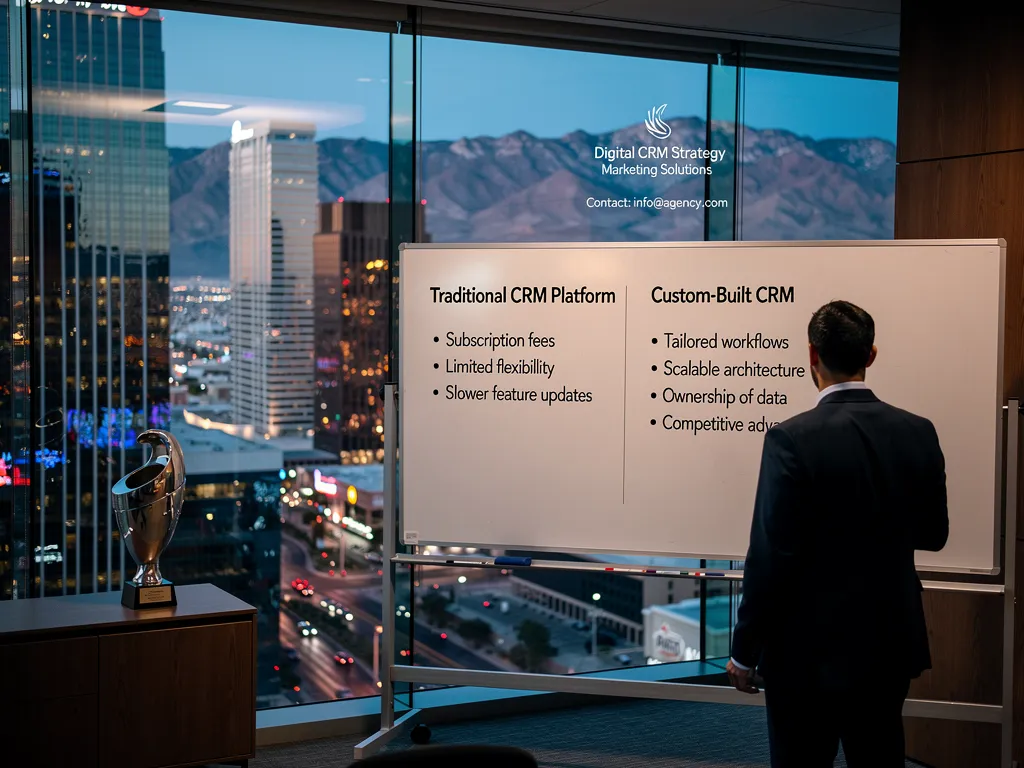
Choose a traditional monolith, such as HubSpot or Salesforce, when:
You need enterprise compliance certifications today without building them.
You have a large sales team that needs a mature sales interface out of the box.
You rely on deep, ready-made integrations such as Salesforce CPQ, HubSpot Ads, or a specific ERP connector.
You prefer vendor-managed security, uptime SLAs, and 24/7 support.
You have the budget to carry CRM as a permanent operating expense.
Choose an Agentically Engineered CRM built into your website when:
You are building or rebuilding an enterprise website and want the CRM included.
You want to own your data model, automation logic, and publishing pipeline.
You want to avoid ongoing platform rent and pay only for infrastructure.
You want the blog and CRM to survive a partner change or service pause.
You have technical capacity or a partner to maintain the codebase.
You want AI agents to modify the CRM schema and logic directly.
How Whisenhunt Media Delivers the Agentically Engineered Advantage

Whisenhunt Media is a high-end Las Vegas video production and digital marketing agency. Every enterprise website we build includes an Agentically Engineered CRM. It is not an add-on, a plugin, or a HubSpot CRM integration bolted on after the fact. The CRM is the website's backend.
Our Human-Led AI-Powered approach includes:
Expert video production feeds the content pipeline that supports the CRM.
SEO strategy helps the blog attract the right prospects into your owned funnel.
Agentic engineering builds, extends, and maintains the CRM schema and automations as your business changes.
Strategic partnership gives you support while you maintain the stack, unless you choose to work alone.
We help clients weigh the trade-offs honestly. For some, HubSpot CRM is the right call. For many teams building a modern web presence, an Agentically Engineered CRM is a stronger alternative. Its value grows because you own every layer.
Ready to Own Your CRM Infrastructure?
Do not rent the machine. Own the engine. Partner with Whisenhunt Media to build an enterprise website with an Agentically Engineered "Vibe Coded" CRM. Your blog, leads, and automations stay yours.
Contact us today at +1-702-832-7882 or **info@whismedia.com** to discuss your project. Visit **https://whismedia.com** to see our work.
Whisenhunt Media 6435 S Durango Dr Ste 110-131, Las Vegas, NV 89113, US
Own the engine, or keep paying the toll.
Free tool
See what AI says about your business
Kiki, our AI strategist, reads your real website in a live browser and hands you a personalized growth plan in about a minute. Free, no signup.
Analyze my business →About Whisenhunt Media
Written by the Whisenhunt Media production team, from the projects the studio plans, shoots, and ships in Las Vegas and on the road.