
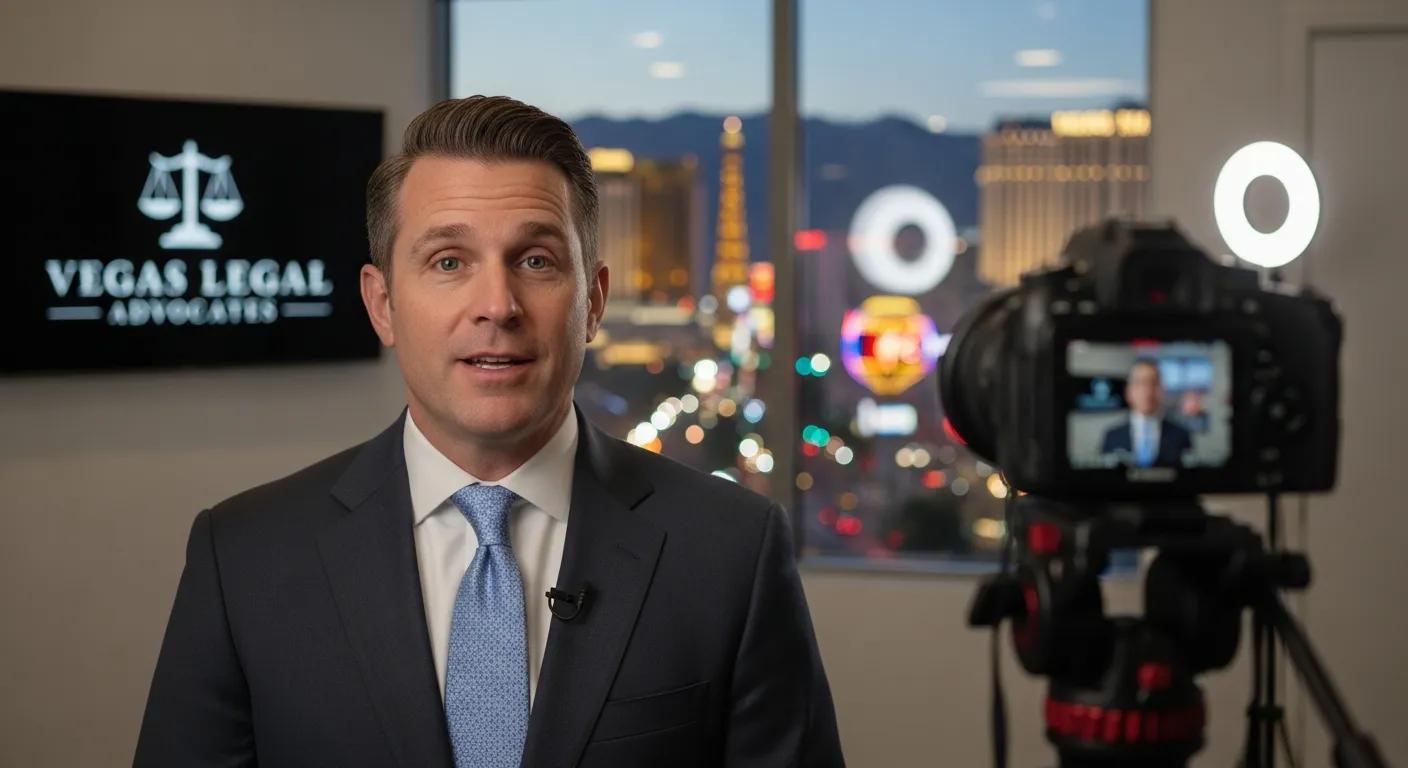
A hesitant prospect lands on your law firm's website, watches no video, and leaves without calling. Strong personal injury marketing can change that moment. Clear video helps people understand your services, meet your attorneys, and feel ready to take the next step. This guide explains how law firms can use video to build authority, earn trust, and attract clients in Las Vegas. It covers useful video formats, brand elements, production steps, distribution tactics, and key performance metrics. The examples apply to personal injury, corporate, and local practices.
Why Is Video Marketing Essential for Building Law Firm Authority?
Video helps law firms build trust and explain complex legal topics. It also gives people more ways to find the firm online. A short video can show an attorney's tone, care, and knowledge. This can lower the risk that a new client feels before a consultation. Search engines and social platforms also create more reach for useful video content. The sections below explain how video builds trust and helps Las Vegas firms compete.
How Does Video Build Trust and Credibility for Attorneys?
Video builds trust through direct communication, client stories, and useful legal guidance. When an attorney speaks to the camera, viewers can notice tone, eye contact, and pace. These details can make the attorney seem more open and dependable. Testimonial videos and case summaries give people a clear view of the client experience. They also help answer doubts before a person requests a consultation. Local market conditions can make this advantage even stronger.
What Are the Key Benefits of Video for Las Vegas Legal Marketing?
Video can improve local visibility for Las Vegas law firms. It can also give prospects more proof when they compare firms. Many firms still use little video content. A useful, well-made video may therefore earn attention on YouTube, local search, and social feeds. Video also works well on mobile devices, which many people use while away from home. A clear plan helps firms turn these benefits into steady results.
What Are the Core Elements of a Strong Law Firm Branding Strategy?

A strong law firm brand starts with a clear mission, voice, visual style, and client journey. Every video should reflect these parts of the brand. The firm identity explains what makes the firm different and what clients can expect. The brand voice guides scripts and attorney interviews. The visual style covers lighting, colors, type, and graphics. When these elements stay consistent, people can recognize the firm across each channel.
Different brand components and how video supports them:
Brand Component | Attribute | Video Impact |
|---|---|---|
Mission & Values | Core promise communicated | Reinforces credibility through narrative scenes and attorney statements |
Brand Voice | Tone and messaging hierarchy | Ensures consistent scripting and on-camera delivery across assets |
Visual Identity | Logo, color palette, typography | Strengthens recognition through lower-thirds, color grading, and intros |
Client Journey | Awareness → Consideration → Conversion | Video guides viewers along steps with CTAs and retargeting segments |
How Do Brand Identity and Brand Voice Shape Legal Brand Authority?
Brand identity tells people what a firm stands for. Brand voice shows how the firm speaks. Video makes both elements easy to see and hear. A short statement about the firm's value can become memorable when an attorney delivers it with confidence. Use script templates, rehearsal notes, and style guides to keep each video consistent. These tools also help the team plan shots and interview questions.
How Does Visual Identity Enhance a Law Firm’s Brand with Video?
Visual identity grows stronger when production choices match the firm's work and position. Lighting, color, lower-thirds, and motion graphics should feel connected across each video. Use the same opening and closing style on YouTube, website videos, and social ads. High production quality should support a natural presentation. Clear lighting and simple graphics can make attorneys and clients feel more credible. Repeated visual cues help viewers connect each video to the firm.
How Can Law Firms Use Strategic Video Content to Establish Thought Leadership?

Useful video can make an attorney a trusted source of legal information. Start with common questions from clients and answer them in plain language. Publish videos on a steady schedule so viewers know what to expect. YouTube and LinkedIn can extend the reach of each piece. You can also place videos in blog posts and practice-area pages. Follow the ethics guidance that applies to legal advertising, including the American Bar Association's ethics opinions. The formats below support a practical editorial plan.
High-impact video types for thought leadership:
Explainer Videos: Short answers to common legal questions. They can improve search visibility and reduce confusion.
Webinars and Long-form Interviews: Longer discussions that show depth to referral partners and complex-case prospects.
Q&A or AMA Sessions: Live or recorded sessions that show candor and address audience concerns.
These formats create a tiered content plan. Short explainers can lead viewers to webinars and interviews. Each format can also guide future production priorities.
What Types of Thought Leadership Videos Build Legal Expertise?
Useful thought leadership videos include process explainers, long interviews, and webinar recordings. Explainers often work well at 1 to 3 minutes for mobile viewers. Longer interviews can run 20 to 60 minutes when the topic needs more detail. A steady schedule also helps. For example, a firm might publish one explainer each week and one long-form video each quarter. The team can then reuse each asset as clips and social posts. Clear formats create repeatable production workflows.
How Do Testimonial Videos Strengthen Social Proof and Client Trust?
Testimonial videos turn written reviews into personal stories. They can show the client's concerns, the firm's process, and the result. Ask open questions rather than requesting scripted praise. Film in a setting that feels natural to the client. Obtain clear consent before publishing any story. Review the final video for accuracy and compliance. A steady testimonial process can give future clients useful proof.
How to Craft Your Law Firm’s Brand Story Through Video Content?
A clear brand story needs a simple structure. Use a hook, problem, approach, proof, and call to action. Apply that structure to both firm videos and practice-area videos. A focused story helps viewers understand why the firm exists and how it helps clients. Script templates and shot lists can keep the message on track. Use this process to build brand story videos for Las Vegas audiences.
A step-by-step approach to brand story video production:
Define the Hook: Address a client problem in the first 5 to 10 seconds.
Explain the Problem: Describe what clients face and why it matters.
Demonstrate Approach: Show the firm's process or values.
Provide Proof: Include accurate client outcomes or case highlights.
Close with CTA: Tell viewers how to request a consultation.
This order keeps the script, visuals, and distribution focused on recognition and lead capture.
What Makes “About Us” and Brand Story Videos Effective for Law Firms?
Effective “About Us” videos balance authority with warmth. They show real people, explain the firm's work, and give viewers a clear next step. Start with a direct hook. Use real settings and accurate outcomes. Place the video on the homepage and relevant practice pages. The final scene should explain how viewers can contact the firm or learn more.
How Do Practice Area Explainer Videos Demonstrate Legal Expertise?
Practice-area explainers break complex legal processes into clear steps. This helps potential clients decide whether to seek advice. Use a problem, solution, and next-steps structure. Add relevant search terms to the title and description. Place the video on the related practice page. For longer videos, add timestamps to improve navigation. These steps connect search intent with a consultation.
Once the story and explainer formats are ready, the firm needs a plan for production and distribution in Las Vegas.
Whisenhunt Media callout: As a Las Vegas-based video solutions provider, Whisenhunt Media supports commercial and corporate video production. The team also helps align video assets with SEO and paid campaigns. Law firms can book a free strategy meeting to review fit and portfolio examples such as legal-focused case studies.
How to Implement Video Marketing for Maximum Impact in the Competitive Las Vegas Legal Market?
Las Vegas firms need a shared plan for production, distribution, paid promotion, and measurement. Start with high-intent practice areas, such as personal injury. Divide the work among hero, hub, and help content. Use local terms, local business schema, and Las Vegas-focused titles. The table below compares common distribution channels.
Channel comparison for legal video distribution: services
Channel | Recommended Tactics | Value for Law Firms |
|---|---|---|
YouTube | SEO-optimized titles, playlists, timestamps | High discoverability and branded search lift |
Website | Embedded videos on practice pages with schema | Improves dwell time and conversion rates |
Social (LinkedIn) | Professional snippets and post cadence | Builds referral partner credibility |
Paid (Search/Display) | Short ad creatives and landing page alignment | Immediate lead generation and A/B testing |
What Video Marketing Strategies Work Best for Personal Injury Lawyers in Las Vegas?
Personal injury marketing works best when the message is direct and the next step is clear. Use short ads that run 15 to 30 seconds. Address a specific client need and show what the firm can do. Pair ads with testimonials and focused landing pages. Retarget viewers with deeper explainers or case-study content. Match the ad copy to local search intent. These steps can move prospects from awareness to booked consultations.
How Can Corporate Video Production Enhance Brand Trust for Legal Firms?
Corporate video can show a firm's team, systems, and service standards. These details matter to larger clients, referral partners, and complex cases. Use office footage, leadership interviews, and client-service scenes to show how the firm works. Keep the presentation polished but human. Corporate videos can support business referrals while consumer videos build personal trust. Measurement then shows which production choices deserve more investment.
Whisenhunt Media callout: Whisenhunt Media combines commercial and corporate video production with website development and marketing coordination. Its Las Vegas teams can help firms plan production timelines and distribution mixes. The plan can support local SEO and paid campaigns. Firms can book a free strategy meeting to discuss a tailored campaign.
How Do You Measure the Impact of Video on Your Law Firm’s Brand Authority?
Measurement starts by linking each video to a clear goal. Add UTMs and event tracking to show how viewers act. Review brand signals such as branded searches, watch time, and subscriber growth. Track business signals such as leads, consultation rates, and cost per acquisition. Use 30 to 90-day windows for campaigns and quarterly reviews for evergreen content. Test thumbnails and calls to action as results come in. The table below links video types to useful measures.
Video types mapped to KPIs:
Video Type | Measurement Attribute | KPI / Metric |
|---|---|---|
Testimonial Video | Trust signal | Increase in consultation requests (percentage) |
Explainer Video | Engagement and SEO | Average watch time and organic search impressions |
Corporate Video | Institutional credibility | Referral partner inquiries and B2B engagement |
Ad Creative | Conversion efficiency | Click-through rate and cost per lead |
What Key Performance Indicators Show Video’s Effectiveness in Branding?
A small set of KPIs can show whether video is working. Track branded search lift, watch time, audience retention, video leads, consultation rate, and paid acquisition cost. Branded search can signal stronger name recognition. Watch time can show whether viewers find the topic useful. UTM data and landing-page events connect views to business results. Review the numbers often so the firm can improve content and budget choices.
Branded Search Volume Lift: Measures awareness growth over time.
Average Watch Time: Signals content relevance and retention.
Leads from Video Traffic: Directly ties content to consultations.
Cost per Acquisition (Paid): Shows efficiency of amplification spend.
These KPIs support testing and content updates that build long-term authority.
How Can Analytics Inform Continuous Improvement of Legal Video Marketing?
Analytics show which titles, thumbnails, and calls to action perform best. They also show where viewers stop watching. Use those findings to plan A/B tests and content updates. Review paid campaigns each week. Audit evergreen explainers and testimonials each quarter. Track play clicks, CTA clicks, and form starts as smaller conversion steps. Connect these actions to the full consultation funnel. A regular review process helps each production investment work harder and supports the firm's authority over time.
Partner with Whisenhunt Media for Expert Legal Video Marketing
Video results often reveal the next improvement. Whisenhunt Media helps law firms connect production, marketing coordination, and analytics. Firms can request a free strategy meeting to review measurement plans and portfolio case studies. The right video does more than explain a service. It gives a worried prospect a reason to call.
Free tool
See what AI says about your business
Kiki, our AI strategist, reads your real website in a live browser and hands you a personalized growth plan in about a minute. Free, no signup.
Analyze my business →About Ben Whisenhunt
Ben Whisenhunt is the Creative Director at Whisenhunt Media, specializing in cinematic video production and brand storytelling. With years of experience in the Las Vegas market, Ben helps businesses elevate their brand through compelling visual content.